Electric Scooter Maintenance Canada: How to Keep Your Scooter Running Longer
Electric Scooter Maintenance Canada: How to Keep Your Scooter Running Longer
Buying a good electric scooter is only the beginning. If you want your scooter to stay reliable for years of commuting and weekend rides, regular maintenance matters just as much as motor power, battery capacity or top speed.
That is especially true for riders in Canada. Changing temperatures, rain, rough pavement, road debris and months of winter storage can all affect how an electric scooter performs over time.
The good news is that electric scooter maintenance does not have to be complicated. A few regular checks can help you catch wear early, protect important components and reduce the chance of unexpected repairs.
This electric scooter maintenance Canada guide covers the areas riders should pay the most attention to, including tires, brakes, batteries, folding mechanisms, cleaning and seasonal storage.
If you are still looking for the right ride, you can also browse EZWheel Canada's current selection of electric scooters from brands including Kaabo, Dualtron, Teverun, InMotion, Segway, VSETT and more.

Why Electric Scooter Maintenance Matters in Canada
Electric scooters combine mechanical components, electronic systems and lithium-ion batteries. Each of these parts is affected differently by regular use.
Tires gradually lose pressure and wear down. Brake pads become thinner. Bolts can loosen because of repeated vibration. Dirt and moisture can accumulate around moving parts. The battery is also affected by charging habits, temperature and long periods of storage.
Canadian conditions can make these issues more noticeable. Fall often brings wetter roads and greater temperature changes, while winter introduces cold temperatures, salt, slush and long periods when many scooters are not being ridden.
You do not need to dismantle your scooter every week. A better approach is to build a simple routine: check the most important safety components regularly, keep the scooter clean and dry, follow the manufacturer's recommendations and get professional help when something does not feel right.
1. Check Your Tires Regularly
Your tires are the only part of your scooter constantly in contact with the road, making them one of the most important maintenance items.
If your scooter uses pneumatic tires, check the pressure regularly and follow the PSI recommended by the manufacturer. Tire pressure that is too low can increase rolling resistance, reduce range and make the tire more vulnerable to damage. Excessively high pressure may reduce comfort and available traction.
There is no single correct PSI for every electric scooter. Tire size, scooter design, load and manufacturer specifications all affect the recommended pressure.
You should also inspect the tread and sidewalls for cuts, cracking, embedded glass, bulges, uneven wear or repeated pressure loss. Canadian roads can become particularly rough after freeze-thaw cycles, so it is also a good idea to inspect the wheel and tire after hitting a significant pothole or curb.
When a tire or inner tube eventually needs replacement, EZWheel carries electric scooter tires, tubes and compatible parts, including pneumatic scooter tires and inner tubes.
2. Don't Wait Until Your Brakes Feel Bad
Acceleration and top speed receive plenty of attention when people shop for electric scooters, but braking performance is even more important once you begin riding regularly.
Before riding, squeeze your brake levers and make sure they feel consistent. If a brake suddenly feels softer than usual, requires significantly more lever travel or the scooter takes longer to stop, the braking system should be inspected.
Brake pads are wear items and will eventually need replacement. Disc rotors can also become contaminated, misaligned or damaged, while hydraulic braking systems may require adjustment or servicing over time.
Listen to your scooter as well. A persistent grinding or scraping sound should not simply be ignored. A small adjustment or pad replacement is usually much easier to deal with than continuing to ride until braking performance deteriorates.
This is especially important for heavier and higher-performance scooters, where greater speed and weight place more demand on the braking system.
EZWheel also stocks electric scooter brake pads and brake components for compatible models.
3. Take Care of the Battery
The battery is one of the most valuable components of an electric scooter, so good charging and storage habits are an important part of keeping your scooter running longer.
Most modern electric scooters use lithium-ion batteries. These batteries should always be charged according to the manufacturer's instructions and with the correct charger.
Health Canada specifically includes e-scooters and e-bikes in its lithium-ion battery safety guidance. The agency recommends charging devices according to manufacturer instructions, charging at room temperature where the device can be observed, and avoiding batteries that are swollen, dented or otherwise damaged. Riders can read the complete Health Canada lithium-ion battery safety guidance for additional information. citeturn453619search3
For everyday scooter ownership, the most important lesson is simple: do not experiment with incompatible chargers, batteries or battery modifications.
Cold temperatures deserve extra attention in Canada. Health Canada recommends storing lithium-ion batteries at room temperature in a dry location and avoiding exposure to very hot or cold environments. citeturn453619search3 If your scooter has been sitting somewhere very cold, follow the manufacturer's instructions regarding temperature before charging it.
You should also pay attention to changes in battery behaviour. A dramatic and unexplained reduction in range, charging problems, unusual heat, visible damage or swelling should never be ignored. Stop using a visibly damaged battery and have it professionally assessed.
4. Keep Your Scooter Clean Without Soaking the Electronics
Cleaning is not just about keeping your scooter looking good.
Dust, grit and road residue can accumulate around brakes, wheels, suspension components and folding joints. In Canada, road salt and dirty slush can also leave residue on metal components during the colder months.
However, an electric scooter contains a battery, controller, charging port, display and electrical connections. That means cleaning it with a pressure washer or aggressively spraying water around the scooter can create unnecessary risk.
Always check the manufacturer's water-resistance guidance for your specific model.
For routine cleaning, use a soft or lightly dampened cloth on the frame and deck. Carefully remove dirt around the wheels and accessible mechanical areas without forcing water into the charging port, display, controller or electrical connections.
Make sure charging-port covers are properly closed after charging and allow the scooter to dry before storing it.
If you ride on wet or salty roads, removing residue sooner rather than leaving it on the scooter for a long period can also help reduce corrosion.
5. Inspect the Stem, Bolts and Folding Mechanism
Electric scooters experience constant vibration from pavement, braking, acceleration and everyday riding.
Over time, that vibration can affect fasteners and joints. Riders should periodically check the handlebars, stem, folding mechanism and other important structural connection points.
What you are looking for is movement that was not there before.
If the handlebars develop noticeable play, the stem begins to feel loose or the folding mechanism no longer locks as securely as it once did, investigate the issue before continuing to ride normally.
At the same time, do not simply tighten every bolt as hard as possible. Over-tightening can damage threads or components.
When available, follow the manufacturer's torque specifications. If the source of looseness is unclear, particularly around the steering or folding mechanism, professional inspection is the safer approach.
6. Check Your Lights, Display and Controls
Mechanical components are only half of an electric scooter.
Before riding, make sure the display, throttle, brake sensors, headlights, brake lights and turn signals, if equipped, are working normally.
Pay attention to intermittent problems as well.
A display that occasionally shuts off, a throttle that responds inconsistently or a light that repeatedly cuts out may indicate a connection or electrical problem that should be investigated.
The charging port should also remain clean, dry and free from visible damage.
Avoid opening the battery, controller or other high-voltage electrical components unless the manufacturer specifically provides a user-serviceable procedure. Electrical troubleshooting and battery repairs are areas where professional service is generally the better choice.
7. Pay Attention to the Suspension
Many modern performance and commuter scooters now use front suspension, rear suspension or both.
Suspension can improve comfort and help the tires maintain better contact with uneven pavement, but these additional moving components also require attention over time.
Listen for unusual noises and watch for leaking components, excessive movement or a noticeable change in ride quality.
If the scooter suddenly feels less stable, begins bouncing differently or develops new sounds around the suspension, an inspection can help determine whether adjustment, servicing or replacement parts are needed.
This is particularly important for riders who regularly travel over rough pavement or put significant mileage on their scooters.
8. Prepare Your Scooter for Canadian Winter Storage
For many Canadian riders, winter means using an electric scooter less frequently or storing it completely for several months.
Where and how you store the scooter matters.
Avoid leaving it outdoors, on an exposed balcony or in an environment where it will experience extreme temperature swings and moisture. A dry indoor location with a moderate temperature is generally a better environment for the scooter and its battery.
Health Canada's current lithium-ion battery guidance recommends storing batteries at room temperature in a dry location. citeturn453619search3
Before putting your scooter away for an extended period, clean it, inspect the tires and brakes and check the manufacturer's battery-storage recommendations. Different manufacturers may specify different charge levels or charging intervals for long-term storage, so follow the instructions for your particular model rather than applying one universal percentage to every scooter.
When spring arrives, do not simply take a scooter that has been sitting for months and immediately ride it at full speed.
Check tire pressure, braking performance, lights, folding components, battery condition and general operation before your first longer ride.
9. Know When DIY Maintenance Is Not Enough
There is plenty an electric scooter owner can check at home, but not every repair should become a DIY project.
Cleaning, checking tire pressure and visually inspecting components are relatively straightforward. Battery diagnostics, hydraulic brake servicing, controller problems, motor repairs and significant electrical or structural issues are different.
If your scooter develops a major unexplained loss of range, charging problems, persistent brake issues, loose steering, motor or controller errors, unusual electrical behaviour, suspension problems or damage after a major impact, it is worth getting the scooter professionally inspected.
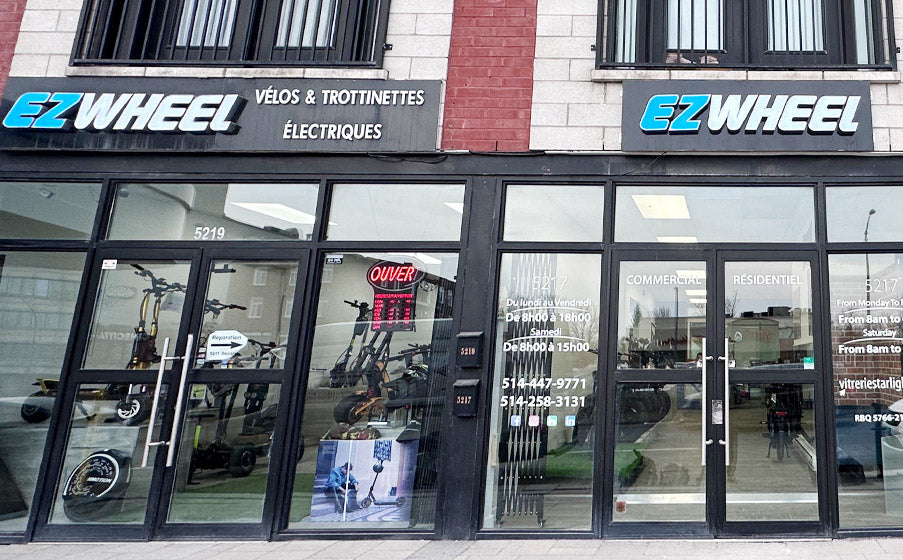
EZWheel operates a PEV, eBike and eScooter Repair Centre in Montreal, with repair and maintenance support available for personal electric vehicles. The current EZWheel site also provides access to replacement electric scooter parts including tires, brakes, controllers, chargers, displays and motors. citeturn747215view0turn216101search2
Catching a developing problem early can be much easier than waiting until the scooter can no longer be ridden.
A Simple Electric Scooter Maintenance Checklist
A good electric scooter maintenance Canada routine does not require a complete service every time you ride.
Before riding, check your tire condition and pressure, test your brakes, confirm the stem and folding mechanism feel secure, and make sure the lights and controls operate normally. On a regular basis, inspect brake wear, clean away dirt and road debris and pay attention to loose components or new noises.
After wet or dirty rides, clean and dry the scooter appropriately. If you have ridden on roads affected by salt or heavy grime, do not leave that residue sitting on the scooter indefinitely.
Before long-term winter storage, clean the scooter, check its condition and follow the manufacturer's specific battery-storage instructions. When returning to riding after several months, complete another inspection before your first longer trip.
The most useful maintenance habit is simply noticing changes. A different sound, unusual vibration, softer brake lever or sudden loss of range can all be early signs that something needs attention.
How Often Should You Service an Electric Scooter?
There is no universal service interval that applies to every scooter and every rider.
Someone commuting daily in Montreal may put far more wear on tires and brakes than someone who rides recreationally a few times each month. A high-powered dual-motor scooter will also place different demands on components than a lightweight commuter model.
Your riding distance, scooter weight, terrain, weather and riding style all affect maintenance needs.
Rather than relying on one fixed number of kilometres, combine the manufacturer's recommended maintenance schedule with regular visual and functional checks.
Frequent riders should inspect wear items more often, particularly tires and brakes.
If you are unsure about the condition of your scooter, especially after a long winter storage period, an inspection or tune-up can give you greater confidence before returning to regular riding.
Keep Your Electric Scooter Running Longer
Good maintenance is not about replacing parts constantly or bringing your scooter to a repair centre every few weeks.
It is about catching small changes before they become larger problems.
Check your tires. Pay attention to your brakes. Keep the scooter clean. Treat the battery properly. Inspect structural components and listen for unfamiliar sounds.
Canadian weather makes these habits particularly worthwhile. Rain, temperature changes, damaged pavement, road salt and months of winter storage can all influence how an electric scooter ages.
Following a consistent electric scooter maintenance Canada routine can help keep your scooter reliable and ready for more rides throughout the season.
If your scooter needs replacement components, explore EZWheel's electric scooter parts and accessories. If you need help diagnosing or repairing a problem, visit the EZWheel PEV Repair Centre in Montreal for professional service.
And if it may be time to replace rather than repair your current ride, you can explore the latest electric scooters available at EZWheel Canada.
Recent Blogs

Electric Scooter Maintenance Canada: How to Kee...
Learn how to keep your electric scooter running longer in Canada with practical maintenance tips for tires, brakes, batteries, cleaning and winter storage.

Can You Ride an Electric Scooter in Fall and Wi...
A practical guide for Canadian riders on using electric scooters in cold, wet, and snowy conditions. Covers temperature & battery impact, rain & IP ratings,...

Labour Day Electric Scooter & eBike Deals: What...
Labour Day Electric Scooter & eBike Deals: What to Buy Before Summer Ends